Guide
Natural support for women's skin and tone: what the facts say
Collagen, vitamin C, hyaluronic acid, what from the offering of "wellness" supplements actually has a clinical basis.
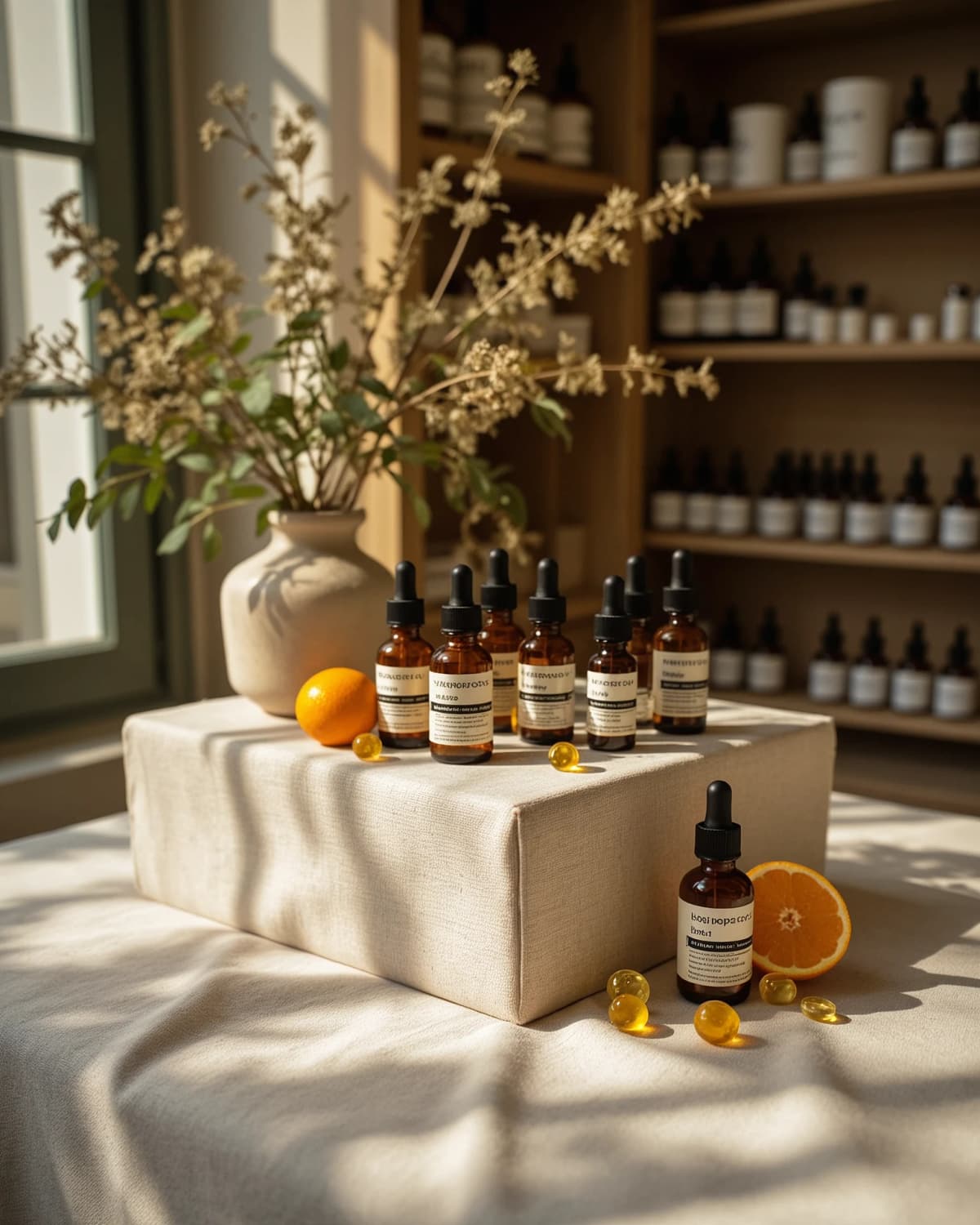
The market for "women's wellness" supplements is exhausting, because it often promises more than it can prove. Here is a summary of what independent research says.
Collagen in powder or tablets
Clinical studies show a small but measurable improvement in skin elasticity and hydration after 8 to 12 weeks of taking 5 to 10 g of hydrolysed collagen per day. The effect depends on regular use and on a sufficient intake of vitamin C, which is needed for collagen synthesis.
In the short term (the first two weeks) there is as a rule no noticeable effect. In the long term (three months and more) it makes sense to notice a change.
Vitamin C and zinc
Both take part in collagen synthesis and tissue renewal. A deficiency of either weakens the effect of all other supplements. In most people with an otherwise balanced diet, supplementation is not necessary, but it is safe if you choose it.
Hyaluronic acid
Topically (cream, serum) it has a clearly proven effect on skin hydration. Orally (capsules) the evidence is weak, a few studies show an effect, most do not. If you choose the oral form, do not expect a revolution.
What realistically has the greatest effect
Sleep. Sleep before midnight, 7 to 8 hours, regularly. Spirits and nicotine are the strongest accelerators of skin ageing, more than any supplement.
Supplements are an addition to basic hygiene, not a substitute for it. A good wellness product has a clear declaration, a known production batch, a clearly stated recommended daily amount. Everything else is marketing.